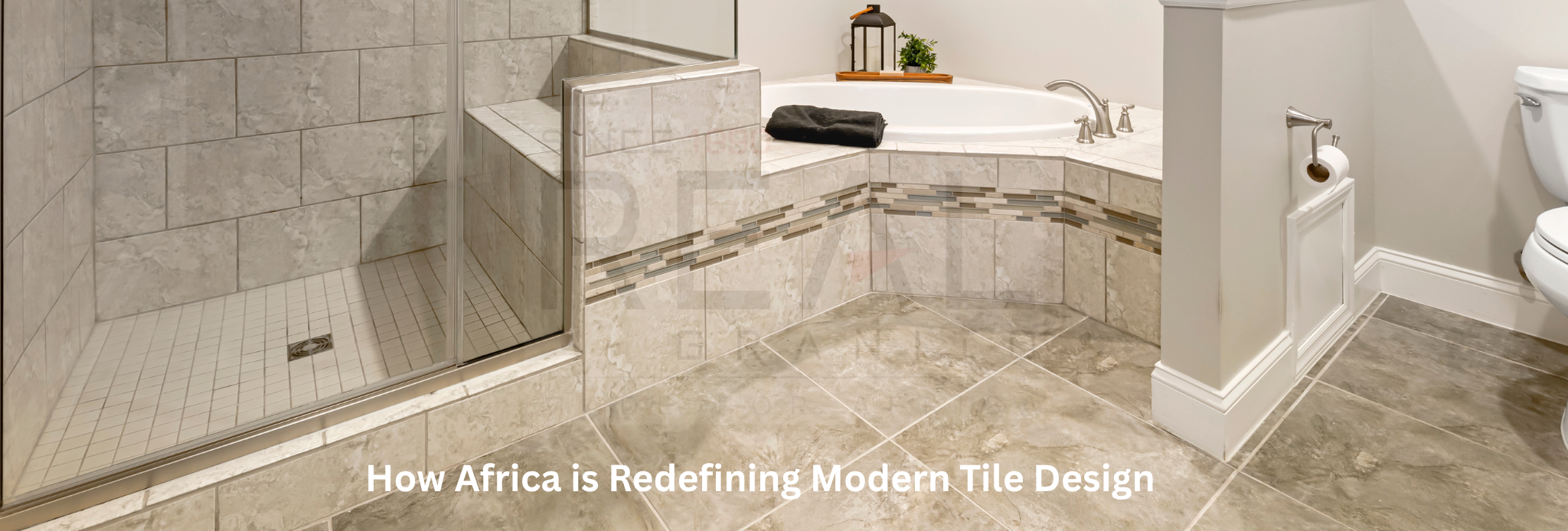
How Africa is Redefining Modern Tile Design
Across the African continent, design is no longer being defined by imported ideas that are being shaped from within. From the shimmering skylines of Nairobi and Lagos to the coastal developments of Dar es Salaam and Accra, architecture in Africa is expressing a new visual language. One that values material honesty, climate relevance, and the tactile beauty of well-made surfaces.
At the heart of this evolution lies an often-overlooked element: the tile.
Tiles are no longer a mere functional finish. They’ve become an architectural statement-one that connects craftsmanship, culture, and climate in equal measure. The shift towards contemporary tile designs reflects a continent that’s building for the future while staying deeply connected to its sense of place.
The Shift Towards Contemporary Material Language
Modern African architecture is moving away from purely ornamental forms to focus on materials that carry integrity and permanence. In this shift, tiles have emerged as one of the most adaptable components in a designer’s toolkit.
Porcelain and ceramic tiles in Africa, once imported purely for utility, are now being specified for texture, tone, and tactile sophistication. The preference is clear: surfaces that perform under pressure, endure humidity and heat, and still look composed decades later.
Urban projects in Johannesburg, Lusaka, and Kigali show how architects are using large-format modern tiles for architects not just as flooring but as structural and aesthetic layers, all wrapping façades, lobbies, and even exterior landscapes in seamless continuity. These spaces rely on tiles not only for their finish but for their ability to express scale, geometry, and rhythm.
Commercial Design: The New Stage for Innovation
Africa’s commercial landscape is transforming at a record pace. Offices, retail environments, and hospitality projects are being built with a focus on sensory experience, how a space feels as much as how it looks.
In these environments, tiles for office and retail spaces have become a key design tool for balancing durability and design clarity.
Architects are increasingly drawn to innovative commercial tiles that combine functionality with design presence. Slip-resistant matte tiles line high-traffic corridors; soft-sheen satin finishes bring warmth to workspaces; sculpted textures add depth to boutique interiors.
The emphasis is on restraint, surfaces that quietly support architecture rather than compete with it.
Retail spaces, too, are seeing a design renaissance. From Lagos’ malls to Cape Town’s lifestyle complexes, developers are embracing designer tiles for developers that reflect natural materials such as stone, travertine, and onyx that offer superior performance and easier maintenance. Tiles, once an afterthought, are now considered early in the design process as part of a project’s architectural DNA.
Design That Reflects Climate and Culture
In Africa, design sensibility is inherently linked to climate and culture. Tiles here must serve more than an aesthetic purpose; they must respond to heat, humidity, and human movement.In warmer regions like Ghana and Tanzania, porcelain tiles are favoured for their low porosity and cooling properties. In high-rainfall areas, anti-slip outdoor tiles are vital for safety and durability. Meanwhile, across modern interiors in Nairobi and Kigali, light-toned ceramic wall tiles enhance natural light and soften spatial transitions.
Culturally, designers are also beginning to reimagine traditional African craftsmanship through modern tile solutions for offices and retail stores. Subtle geometric carvings, earthy palettes, and raw finishes echo the continent’s heritage in contemporary form. The outcome is uniquely African modernism, which is global in outlook, yet unmistakably rooted in place.
The Architect’s New Palette
For today’s architects and interior designers, tile selection is less about imitation and more about interpretation.The best design firms are curating materials like an artist builds a palette, thinking about tone, proportion, texture, and light interaction. A polished marble-look porcelain can set the tone for a luxury lobby, while a deep matte tile can ground a modern apartment.
The challenge is harmony and creating surfaces that complement architectural volumes while staying timeless beyond trend cycles.
In this regard, tiles for architects and interior designers aren’t chosen for spectacle but for balance. They create quiet luxury. They are tactile yet technical. And they reflect a growing maturity in Africa’s design culture-one that values material literacy as much as aesthetic vision.
Technology, Sustainability, and the Rise of Smart Surfaces
Advancements in digital printing, surface coating, and kiln technology have changed what tiles can do. Manufacturers now create hyper-realistic stone and wood looks that are nearly indistinguishable from natural materials, yet significantly more durable and sustainable.Sustainability, once a design bonus, is now a baseline expectation. Architects and developers are prioritizing modern tiles for architects with low VOC emissions, recyclable content, and reduced water absorption rates. With Africa’s growing focus on green construction, ceramic and porcelain tiles are being recognized for their longevity and minimal maintenance footprint.
At the same time, innovative commercial tiles with anti-slip, antimicrobial, or heat-resistant properties are being integrated into healthcare, hospitality, and educational spaces. It’s a quiet revolution-technology meeting texture to redefine what a surface can do.
Regional Identity in Tile Preferences
Africa is a collection of dynamic, distinct design identities, all coming in together for a very high-end market share.In West Africa, glossy marble-inspired tiles dominate luxury homes and hotel lobbies.
In East Africa, matte and neutral tones support modernist architecture and minimalist interiors.
In Southern Africa, large slabs with sculpted surfaces are being incorporated into contemporary tile designs that blend local materials with global design elements.
And across the continent, the demand for porcelain and ceramic tiles in Africa continues to outpace other finishes due to their balance of durability, affordability, and design freedom.
Real Granito Africa: Building the Continent’s Design Future
Every design movement needs a foundation that is both literal and metaphorical. In Africa, that foundation is being built through collaboration between global expertise and local ambition.
Real Granito Africa stands as part of that story, supplying designers, developers, and architects with modern tile solutions crafted for the continent’s diverse needs and evolving aesthetics.
With collections that balance craftsmanship, sustainability, and precision manufacturing, Real Granito Africa brings decades of technical expertise from India’s tile industry to some of Africa’s most exciting construction and design projects.
Its focus is not only on exporting tiles, but on creating meaningful design partnerships, empowering Africa’s creative professionals to build spaces that are resilient, refined, and deeply human.
From tiles for office and retail spaces in Nairobi to mixed-use developments in Lagos and residential towers in Johannesburg, Real Granito Africa’s surfaces are already shaping the visual texture of a continent on the rise.
The New Language of Design
Africa’s architectural future is being written in glass, concrete, steel, and tiles.
These surfaces define the way people live, work, and gather. They ground modernity in material reality.
The evolution of tile trends in Africa is not just about decoration, but about direction. It’s about how a continent envisions progress: built on strength, expressed through design, and finished with purpose.